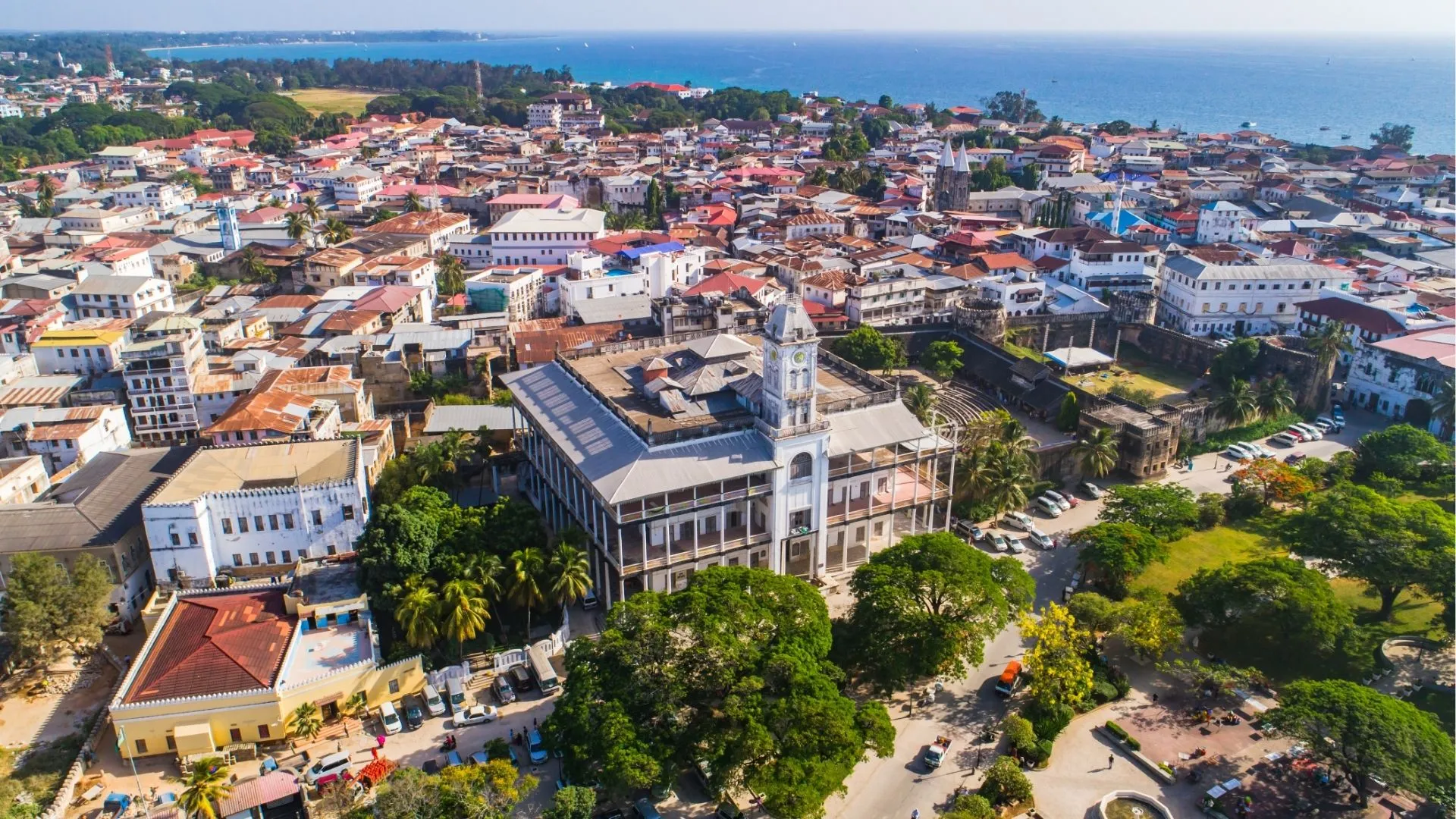
Stone Town, UNESCO World Heritage Site
According to UNESCO, Stone Town is an “exceptional testimony to the cultural contact between Africa, the Arab world, India, and Europe, which gave birth to a unique Swahili culture.” This international recognition in 2000 protects an architectural and cultural heritage that has remained virtually intact since the 18th century.
Why Stone Town is unique:
- Over 500 carved wooden doors, true works of art
- Architecture blending Omani, Indian, Arab, and European influences
- Preserved historic urban layout with its labyrinthine alleyways
- Central role in the history of the spice trade and slavery
The old town retains its original urban fabric with its coral stone houses, barazas (stone benches in front of doors), and finely carved wooden balconies. Wandering through Stone Town is like traveling back in time through several centuries of history.
Must-See Historic Monuments in Stone Town
The House of Wonders (Beit el-Ajaib)
This grand ceremonial palace built in 1883 by Sultan Barghash was the first building in East Africa equipped with electricity and an elevator, hence its name! Its three levels of balconies supported by heavy iron columns overlook the waterfront.
Good to know: Following a partial collapse in December 2020 (including the iconic clock tower), the House of Wonders is currently closed for renovation. Restoration work is expected to last several more years.
The Old Arab Fort (Old Fort)
Built in 1698 by the Omanis on the ruins of a Portuguese church, the Old Fort is one of the oldest and best-preserved monuments in Stone Town. Its thick coral stone walls bear witness to the island’s turbulent military history.
Today: The fort houses a cultural center that hosts taarab concerts (traditional Zanzibari music), dance performances, art exhibitions, and the famous Zanzibar Film Festival every year in July.
The Palace Museum
A former palace of the Sultan of Zanzibar built in the 19th century, this Omani building located on the waterfront has been transformed into a museum tracing the history of the sultanate from 1828 to 1896. You’ll discover period relics, portraits of sultans, and a fascinating glimpse into court life in Zanzibar.
Admission: 5,000 TZS (approximately $2).
Historic Sites in Stone Town
Christ Church Anglican Cathedral and the Former Slave Market
This is one of the most moving places to visit when wondering what to see in Stone Town. Christ Church Anglican Cathedral, built between 1873 and 1880, stands exactly on the site of Zanzibar’s former slave market.
The dark history of slavery: Zanzibar was one of the main slave trading ports in East Africa. It is estimated that approximately 700,000 slaves were sold through Zanzibar between 1830 and 1863. Beneath the cathedral are the old underground cells where slaves were crammed before being sold.
The memorial: Next to the cathedral, a monument commemorates the abolition of slavery and pays tribute to the victims of this dark period. A guided tour provides an in-depth understanding of this painful history that shaped Zanzibar.
Freddie Mercury’s House
The legendary Queen frontman, Freddie Mercury (Farrokh Bulsara), was born in Stone Town on September 5, 1946. His birthplace, located in the Shangani neighborhood, has been transformed into a small museum and art gallery.
Queen fans can discover some memorabilia and photos of the singer, although the family took most of the personal items when they left Zanzibar in 1964. It is nevertheless a pilgrimage site for rock fans from around the world!
Carved Doors: The Emblem of Stone Town
A Unique Architectural Art
The carved wooden doors are undoubtedly the most iconic and photographed element when looking for what to see in Stone Town. Over 500 monumental doors adorn the facades of Swahili houses, each telling a story through its motifs.
The symbolism of the carvings:
- Chains: security and protection of the house
- Fish: prosperity and abundance
- Date palms: fertility
- Lotus flowers: Indian influence
- Geometric patterns: Arab influence
Did you know? The size and ornamentation of the door traditionally indicated the wealth and social status of the owner. The more imposing and carved the door, the wealthier and more influential the family.
Our tip: Get deliberately lost in the alleyways of Stone Town to admire these works of art. The most beautiful doors are often hidden in the less touristy neighborhoods!
Authentic Markets of Stone Town
Darajani Market
The Darajani central market has been the economic heart of Stone Town since the Omani sultanate era. This vibrant covered market offers an intense sensory experience: the scents of spices, merchants’ calls, bright colors of tropical fruits…
What you’ll find there:
- Fresh spices (cloves, cinnamon, cardamom, vanilla)
- Freshly caught fish and seafood
- Exotic fruits (mangoes, dragon fruit, jackfruit)
- Colorful fabrics and traditional kangas
- Local handicrafts
Practical tip: Visit the market early in the morning (7 AM–9 AM) to see the arrival of fresh produce and avoid the heat and crowds.
Forodhani Gardens
Forodhani Gardens, located on the waterfront facing the Old Fort, are THE evening meeting place in Stone Town. From 6 PM, this garden transforms into a huge street food market where locals and tourists come to enjoy Zanzibari specialties.
Must-try dishes:
- Grilled seafood skewers
- Zanzibar mix (stuffed Zanzibari pizza)
- Urojo (spicy lentil soup)
- Fresh sugarcane juice
- Mishkaki (marinated meat skewers)
The candlelit and lantern-lit atmosphere with a view of the Indian Ocean is magical! It’s the perfect place to end your day of discovering Stone Town.
Exploring Stone Town with a Local Guide
Why Choose a Guided Tour
Given the historical richness and complexity of the maze of alleyways, the question “what to see in Stone Town” finds its best answer with a French-speaking local guide. Here’s why:
Advantages of a guided tour:
- Access to secret places off the tourist trail
- In-depth historical explanations about slavery, the sultanate, and Swahili culture
- Local anecdotes and stories passed down through generations
- Avoid getting lost in the labyrinth of alleyways (or know how to get out!)
- Discover the best places for shopping and dining
Discover our Stone Town and spice farm tour for a complete cultural immersion, or opt for our Stone Town and Prison Island combo to combine history with meeting giant tortoises!
Practical Tips for Visiting Stone Town
When to Visit Stone Town
Stone Town can be visited year-round! Unlike water activities, exploring the old town doesn’t depend on tides or weather.
Best times of day:
- Early morning (7 AM–10 AM): To visit Darajani Market and enjoy the cool air
- Late afternoon (4 PM–7 PM): To avoid the midday heat
- Evening (6 PM–9 PM): For the Forodhani atmosphere and evening coolness
To plan your trip, check out our guide on when to visit Zanzibar.
Dress Code to Respect
Stone Town is a predominantly Muslim city (99% of the population). To respect local culture and blend in:
For women:
- Covered shoulders (no tank tops or thin straps)
- Covered knees (long skirts, pants, midi dresses)
- Avoid plunging necklines
For men:
- Shirts or t-shirts
- Long pants or knee-length shorts
- Avoid walking around shirtless
Tip: Bring a light scarf that can be used to cover your shoulders if needed. Loose cotton clothing is perfect for combining comfort and respect for customs.
Shopping and Souvenirs to Bring Back
Stone Town is the ideal place to buy authentic souvenirs:
- Fresh spices (cloves, vanilla, cinnamon)
- Kangas and kikois (traditional colorful fabrics)
- Miniature carved doors
- Silver jewelry
- Tingatinga paintings
- Essential oils and handmade soaps
Tip: Don’t hesitate to politely negotiate prices in shops and at the market. It’s a common and expected practice!
Stone Town Beyond the Monuments
The Cultural Life of Stone Town
Stone Town is not just a museum frozen in time; it’s a living city with a dynamic cultural scene:
Traditional music: Attend a taarab concert, Zanzibar’s traditional music that blends Arab, Indian, and African influences. Performances are regularly held at the Old Fort or the Dhow Countries Music Academy.
Festivals: The Zanzibar International Film Festival (ZIFF) in July and Sauti za Busara (music festival in February) attract artists and visitors from around the world.
Art galleries: Several galleries showcase works by Zanzibari and contemporary African artists.
Places of Worship That Reflect Diversity
What to see in Stone Town to understand its cultural richness? Visit its different places of worship in the same day:
- Mosques: Malindi Mosque (1850) with its distinctive minaret
- St. Joseph’s Catholic Cathedral (1898) with its impressive pillars
- Shiv Shakti Hindu Temple with its colorful painted towers
- Christ Church Anglican Cathedral on the former slave market
This peaceful coexistence of religions perfectly illustrates Zanzibar’s cultural diversity.
Combining Stone Town with Other Excursions
Stone Town as a Starting Point
Stone Town’s strategic location makes it the ideal starting point for many excursions:
Prison Island (30 minutes by boat): Combine history with meeting century-old giant tortoises. Discover our Prison Island excursion.
Spice farms (30–45 minutes by car): After discovering the history of the Spice Island, visit a plantation to touch, smell, and taste cinnamon, vanilla, and cloves.
Safari Blue (departure from Fumba, 20 minutes from Stone Town): For a full day of marine exploration. Book our Safari Blue.
Experience the Authenticity of Stone Town with a Local Guide
Now that you know what to see in Stone Town, all that’s left is to get lost in its history-filled alleyways! From the House of Wonders to the carved doors, through Darajani Market and Forodhani Gardens, every street corner reveals a new treasure.
Our local team accompanies you to discover Stone Town in depth, with Chudy, your French-speaking guide. Explore all our cultural excursions and create your custom itinerary to experience Stone Town like a local!
For more information on Stone Town’s heritage, visit the UNESCO website dedicated to the Stone Town of Zanzibar.