
Ngorongoro Conservation Area
African Eden
Imagine an intact volcanic caldera, spanning 260 km², where wildlife thrives in a natural enclosed amphitheater. A UNESCO World Heritage Site, the Ngorongoro Crater is a unique sanctuary in the world. Once a giant volcano that could have rivaled Kilimanjaro before its collapse, it now hosts one of the highest concentrations of wild animals per square kilometer in Africa. It’s a journey back in time, where 600-meter-high walls protect a self-contained ecosystem.
Quick Facts
Most of Ngorongoro’s wildlife is sedentary. Thanks to year-round water availability, the animals don’t need to migrate.
📐 Area
The total conservation area covers 8,292 km², but the famous crater itself measures only 20 km in diameter.
📍 Location
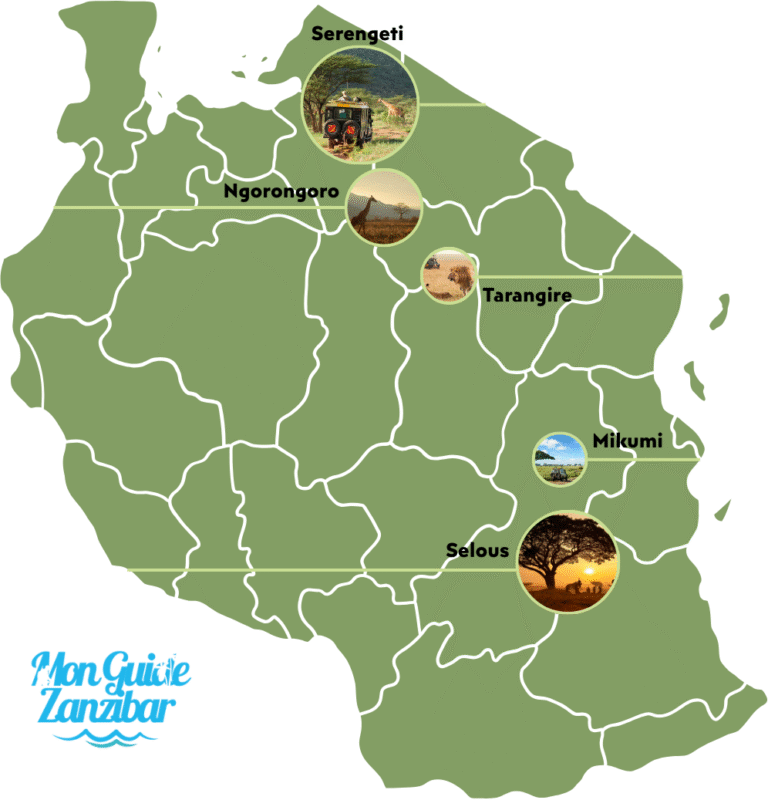
In northern Tanzania, located between Lake Manyara and the Serengeti.
Animals in the Park
Black Rhino Stronghold: This is one of the few places in Tanzania where you have a strong chance of spotting the extremely rare black rhino in the wild.
Predators: An exceptional lion density (among the highest in the world), ubiquitous spotted hyenas, and a few leopards on the wooded ridges.
Giants: You’ll find old male elephants with spectacular tusks (the “Big Tuskers”).
Lake Magadi: This alkaline lake in the center of the crater attracts thousands of flamingos.
Note: There are no giraffes here (the crater walls are too steep for them) or impalas.
How to Get There
By road: About 3 hours from Arusha (180 km) on a paved road to the entrance. The journey offers spectacular viewpoints from the crater rim.
By air: Flights available to Manyara airstrip, followed by a 4×4 transfer.

The Intact Caldera
Ngorongoro is the world’s largest intact and unflooded caldera. Its geological structure is so perfect that it’s visible from space. The 4×4 descent on the steep crater tracks is an exhilarating experience.
Coexistence with the Maasai
This is one of the only places where you’ll see Maasai herders, dressed in their red shukas, grazing their cattle right alongside zebras and wildebeest. This shared land management is unique in the world.
The “Big Five” in One Morning
Ngorongoro is renowned as the “easiest” place to check off the Big Five (Lion, Leopard, Elephant, Buffalo, Rhino) in record time, sometimes in less than 4 hours on safari.
Olduvai Gorge
Located within the conservation area, this gorge is nicknamed the “Cradle of Humankind.” This is where hominid fossils dating back millions of years were discovered by the Leakeys, changing our understanding of human evolution.