
Mikumi National Park
The Southern Serengeti
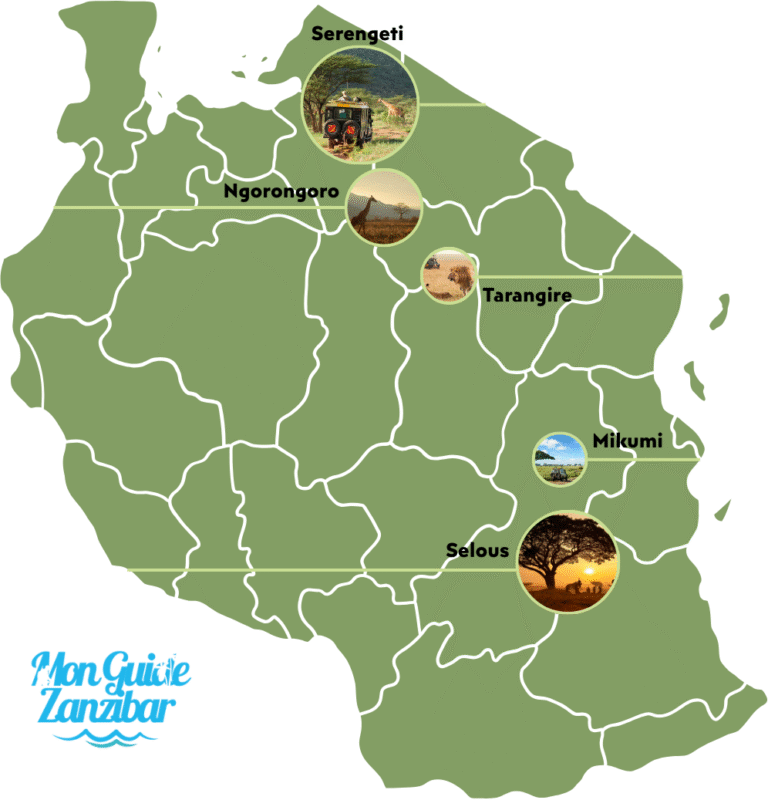
Mikumi National Park, located in southern Tanzania, captivates visitors with its wide-open horizons and abundant wildlife, often compared to the famous Serengeti plains. It borders the Selous Reserve to the south, and together these two areas form a unique ecosystem. Visitors are also more likely to spot lions climbing trees here—something rare in other parks in the country!
Practical info
Mikumi National Park is one of the largest and most accessible parks in southern Tanzania. Known for its vast plains that evoke the Serengeti, it offers an authentic safari experience, away from the crowds of the northern parks. It’s an ideal destination to discover African wildlife in a wild setting that’s still easy to reach.
📐 Area
Around 3,230 km², making it the country’s fourth-largest national park.
📍 Location
The park is located in southern Tanzania, about 300 km west of Dar es Salaam, along the main road to Iringa and Ruaha National Park.
Animals in the park
Elephants
Giraffes
Zebras
Buffalo
Wildebeest
Hippos and crocodiles (around waterholes)
More than 400 bird species
👉 Mikumi is also known for its lions that sometimes climb trees, a rare and spectacular behavior.
How to get there?
From Dar es Salaam:
The park can be reached by road in 4 to 5 hours by car (around 300 km). You can also take a fast train from Dar es Salaam to Morogoro and then continue by car to MikumiFrom Zanzibar:
Take a domestic flight to Dar es Salaam, then continue by road to Mikumi.
Some airlines also offer direct Zanzibar–Mikumi flights, faster but less frequent.

🦁 Wildlife in Mikumi National Park
Mikumi National Park is a true biodiversity sanctuary where visitors can encounter an impressive variety of wild animals. Four of the famous “Big Five” are present here: the lion, leopard, elephant, and buffalo. Hippos, settled in two large muddy pools just a few kilometers from the main entrance, are among the must-see sights. These water points also attract a multitude of waterbirds, offering excellent viewing opportunities.
🌿 The Mkata Plain, the heart of wildlife
In the center of the park stretches the vast Mkata Plain, a true natural stage where wildlife puts on a show. Lions reign here, watching herds of zebras, wildebeest, buffalo, and impalas from the tops of termite mounds or, during the rainy season, perched in trees. Giraffes find food in the acacias lining the river, while elephants come to enjoy these shaded areas.
It’s also on this plain that you have the best chance of spotting the eland, the world’s largest antelope. Alongside it, the majestic kudu and the rare sable antelope roam the wooded miombo slopes that surround the park, adding even more to the richness of the ecosystem.
🐦 Mikumi, a birdwatcher’s paradise
With more than 400 recorded bird species, Mikumi is a dream spot for birdwatching enthusiasts. The Mkata River is especially good for sightings: open-billed storks, marabou storks, red-billed sandpipers, and bustards hunt or rest there. Further on, you’ll often come across guineafowl, hornbills, and malachite kingfishers.
The most colorful birds delight the eye: the yellow-throated bee-eater, the lilac-breasted roller, and the bateleur eagle. During the rainy season, the park also welcomes many migratory birds from Europe, enriching this living picture even more.
1-day excursions to Mikumi National Park
470€
Admission for 1 person
This stay includes fast transfers (round-trip flights), private 4×4 safaris, and lunch. Experience total immersion among lions and elephants before returning to Zanzibar.
2-day excursions in Mikumi National Park
€550
Admission for 1 person
This trip includes fast transfers (ferry, SGR train, and flight), private 4×4 safaris, charming accommodation, and all meals. Enjoy a fully immersive experience among lions and elephants, with a return to Zanzibar.
3-day excursions in Mikumi National Park
650€
Admission for 1 person
An extra day to explore the park’s remote areas and maximize your chances of spotting leopards.
Visit a Maasai tribe village
True icons of East Africa, the Maasai carry forward a fascinating Nilotic heritage in the heart of Tanzania. Easily recognizable by their vibrant attire, they have preserved age-old traditions despite the passage of time. Take advantage of a stop between safaris to visit a traditional village. This immersion, located on the outskirts of the reserves, offers a unique opportunity for cultural exchange, provided it is approached ethically and with respect for their way of life.
What does a visit to a Maasai village involve?
Far more than just a walk, this visit offers a window into their daily life. You will discover the unique architecture of traditional huts during a guided tour at the heart of the village. Highlights include the welcoming songs and celebratory dances, followed by a demonstration of their beaded craftsmanship, a true symbol of their identity.
Note: These villages are not only living spaces but also centers for cultural exchange. It is common to encounter other travelers, as the Maasai open their doors in an organized way to share their customs and support their local economy through handicrafts.
