
Selous National Park
Tanzania's Wild Soul
Welcome to one of Africa’s last intact wilderness areas. Located in southern Tanzania, Selous National Park—whose northern section was renamed Nyerere National Park in 2019—is the continent’s largest wildlife reserve. A UNESCO World Heritage Site, this sanctuary offers an authentic and exclusive safari experience, far from the northern crowds. Crossed by the majestic Rufiji River, the park alternates between grassy savannas, miombo woodlands, and wetlands, creating a unique ecosystem where nature reigns supreme.
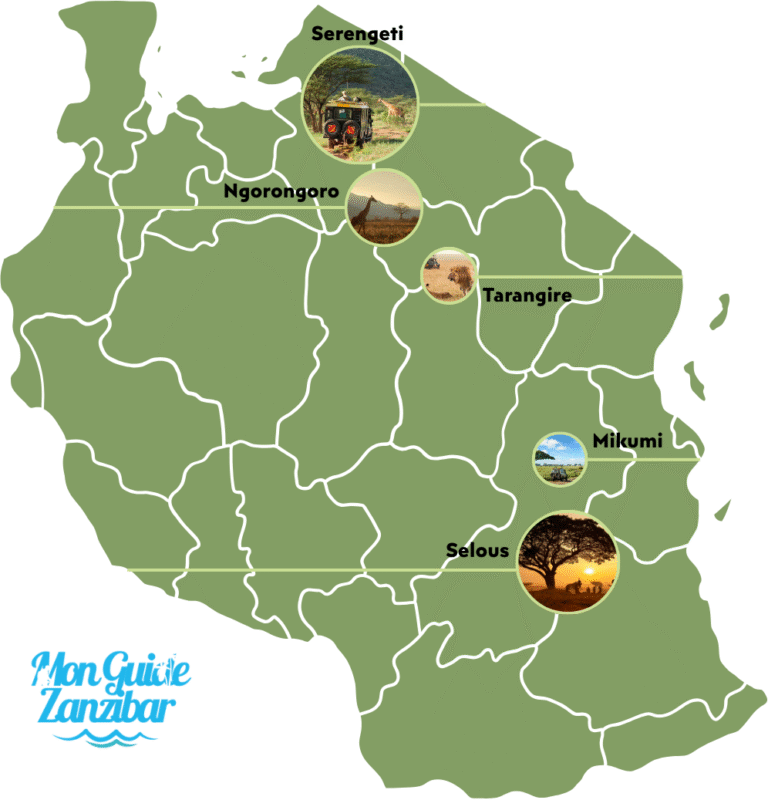
Quick Facts
The park’s wildlife stands out not only for its density but also for the diversity of behaviors observable thanks to the numerous water sources. Unlike the northern parks, here wildlife revolves around the river system.
📐 Area
Approximately 50,000 to 55,000 km² for the entire Selous ecosystem (larger than Switzerland or four times the size of the Serengeti). Nyerere National Park covers about 30,000 km² of this area.
📍 Location
The park is located in southeastern Tanzania, about 230 km southwest of Dar es Salaam.
Wildlife in the Park
The Big Five: Lions, leopards, elephants, buffalo, and black rhinos (rarer).
Signature species: The park has one of the world’s largest populations of African wild dogs.
Aquatic wildlife: Thousands of hippos and Nile crocodiles inhabit the Rufiji River and lakes.
Other species: Masai giraffes, zebras, wildebeest, and numerous antelopes (elands, greater kudus, impalas).
Birdwatching: Over 440 bird species recorded.
How to Get There
By air (recommended): This is the fastest and most comfortable option. Light aircraft (air taxis) connect Dar es Salaam (45 min) or Zanzibar (1 hour) daily to the park’s various airstrips (Mtemere, Siwandu, Beho Beho, etc.).
By road: The journey from Dar es Salaam takes approximately 6 to 7 hours by road. Access is usually via the Mtemere gate. The track can be difficult and rough, requiring a 4×4 vehicle.
By train: You can take the TAZARA railway line (Tanzania-Zambia Railway) which crosses part of the reserve, offering a scenic arrival at Matambwe station.

The Rufiji River
This is the park’s iconic feature. This complex network of channels, lagoons, and oxbow lakes enables a unique experience in Tanzania: boat safaris. Gliding silently on the water to watch an elephant drinking just meters away is one of the most memorable moments of a trip to Selous.
The Legacy of Frederick Selous
The park is named after Frederick Courtney Selous, a famous 19th-century British explorer, hunter, and naturalist who inspired the character of Allan Quatermain. His grave can still be found in the northern section of the park, near Beho Beho.
Stiegler’s Gorge
A spectacular canyon where the Rufiji River plunges into a narrow gorge about 100 meters deep. It’s an impressive geological site that showcases the park’s landscape diversity, from endless plains to rugged terrain.